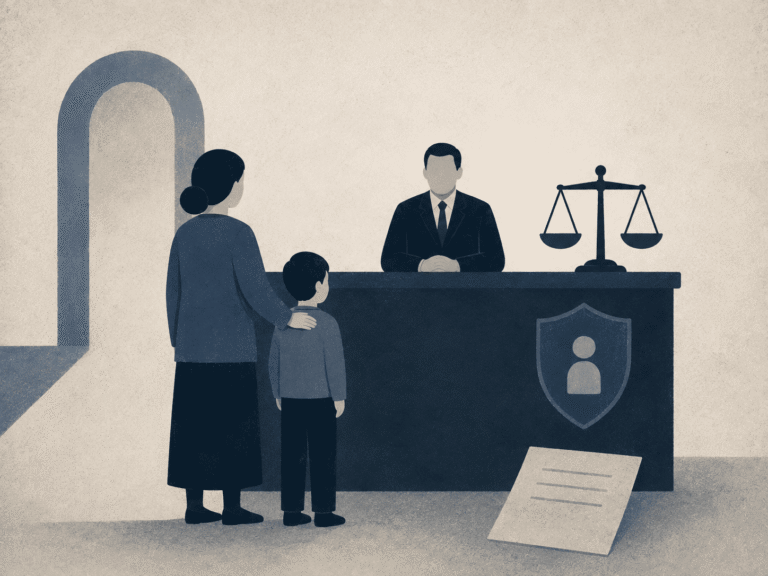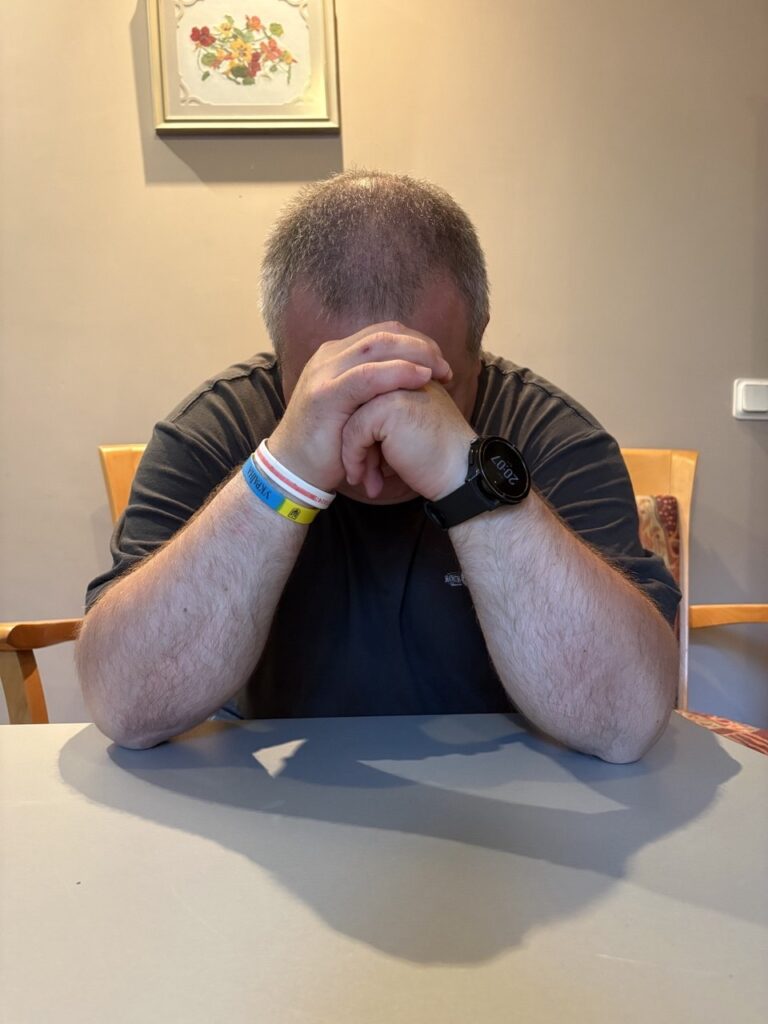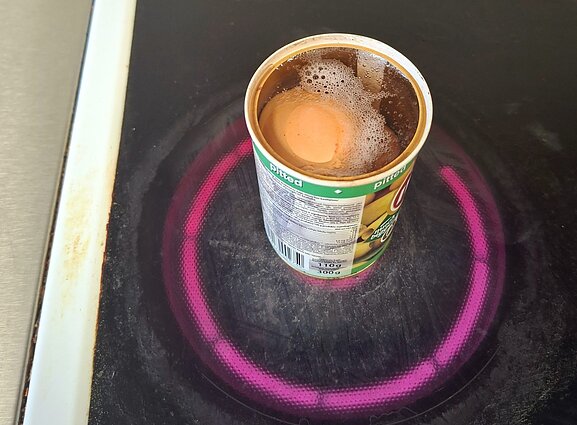

In ZDF’s report, Olga Karach exposes slave labour in Belarusian penal colonies.
The German television channel ZDF aired a report on its programme frontal, examining forced labour in Belarusian penal colonies and how goods produced by prisoners have reached, and continue to reach, the European market through complex supply chains. The report features Olga Karach, a Belarusian human rights defender and director of the human rights organisation Our House, which operates in exile.
Human rights defenders at Our House began investigating this issue and raising it publicly many years ago. In fact, we were one of the first organisations to begin systematically gathering evidence of how the internal system of Belarusian penal colonies works and how prisoners are turned into an almost free workforce.
For us, it all began in 2017 with the “Children-328” campaign.
We began working on behalf of children and very young people who were being sentenced in Belarus to extremely long prison terms under Article 328 of the Criminal Code — for drug-related offences. We did not, and do not, condone drug use or distribution. But we categorically opposed a situation in which a 14-year-old could be sent to a Belarusian prison for 8–10 years simply for smoking marijuana, have visits from his mother restricted to once every six months or even once a year, and be subjected to violence and torture. He would not even have a proper school-leaving certificate. A young man emerges from the penal colony whose only memories of life are prison, violence and torture.
We personally examined 36 criminal case files concerning these children. In the cases we investigated, we found extremely serious violations: problems with the evidence, confessions extracted through violence, coercion, torture, and charges that did not reflect what the teenagers had actually done. In fact, all 36 criminal cases brought against children under Article 328 were fabricated, and the children had not committed the acts of which they were accused.
It was then that we began investigating another issue in detail — the colour coding of prisoners. And we were the first to raise this issue publicly.
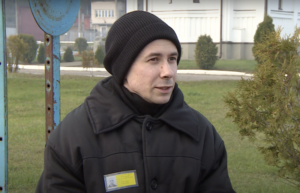
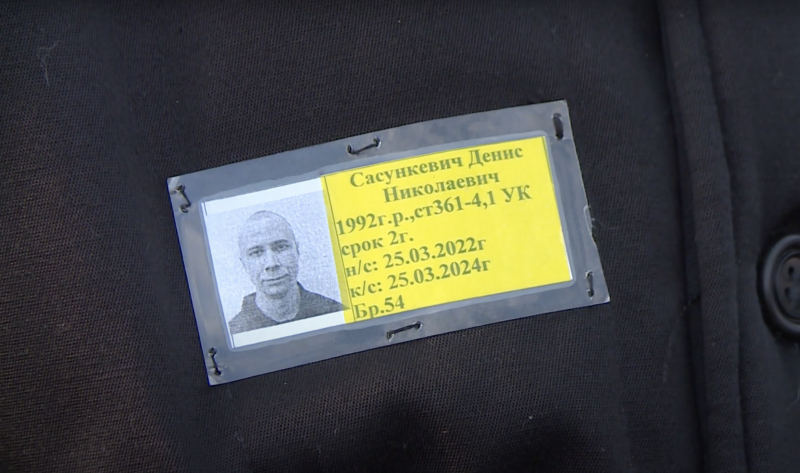
Denis Sasunkevich’s yellow tag. Screenshot from a TRK Brest video report.
Under Belarusian law, prisoners should have equal rights. In reality, prisoners in Belarusian prisons wear tags of different colours, and the colour of the tag on their clothing becomes an instrument of stigmatisation and determines a special regime of control: their treatment by the prison administration, restrictions, visits, parcels, the risk of being placed in a punishment cell, and other conditions of detention.
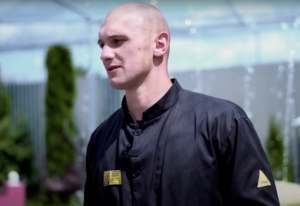
Political prisoner Vladimir Rubashevsky. Screenshot from a Belarusian Television (BT) report.
At first, the Ministry of Internal Affairs categorically denied that such a system existed and repeatedly accused us of lying. In its response of 21 November 2017, the Ministry claimed that the colour was supposedly “not regulated by anything”. We did not give up: we stood our ground and gathered evidence. Eventually, after two years of a desperate struggle with the Ministry, the prison authorities, in an official response dated 23 July 2019, were already explaining the use of green, yellow and red markings for different categories of prisoners.
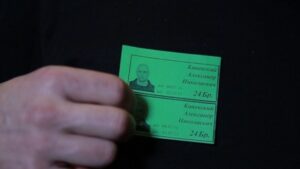
Alexander Kanevsky’s green tag. Photo: spring96.org
“Children-328” received green tags, while people whom the authorities considered “prone to extremism” — that is, political prisoners — were marked in yellow and red.
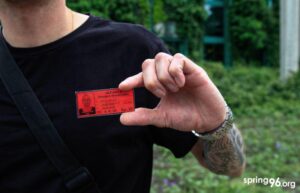
Dmitry Abramuk and the red tag from the penal colony. Photo: spring96.org
After 2020, yellow tags became one of the symbols of the plight of political prisoners in Belarus.
There is a particularly chilling historical symbolism in this. Political prisoners in present-day Belarus wear yellow tags — a colour that inevitably evokes the yellow star with which the Nazis marked Jews. To us, this use of the symbolism of stigmatisation by the Belarusian state appears particularly cynical.
Following the protests of 2020, colour coding spread far beyond the penal colonies. Detainees were marked with paint of different colours during their arrests. Our House documented testimonies indicating that the colour of such a mark was linked to the degree of violence that followed: who should be beaten more severely, who should be singled out for special treatment, who should be considered “dangerous”, and who could be released.
But the investigation into “Children-328” gradually led us to an even more disturbing question.
Why would the state send such an enormous number of children and young people to penal colonies for such long terms?
For many years, we spoke about the scale of the problem: according to the data available to us at the time, of approximately 33,000 prisoners, around 20,000 were people convicted under Article 328. These were primarily teenagers and very young people. This is precisely why Article 328 is known in Belarus as the “people’s article”.
Gradually, it became clear that behind the repressive system there was also an enormous state-run shadow economy.
State-owned manufacturing enterprises operate in Belarusian penal colonies. Prisoners produce furniture, wood products, textiles, metal goods and many other products. They receive 10 cents, 50 cents or 1 euro for this work, while the goods they produce enter commercial supply chains and are sold to the West.
This is why, for us, the issue of “Children-328” gradually became an issue of the Belarusian GULAG and what is effectively slave labour by prisoners in Belarus.
Subsequent international investigations confirmed the scale of this system. Earthsight established that around 8,000 enslaved prisoners worked at approximately twenty woodworking enterprises linked to penal colonies, while prison enterprises produced hundreds of types of goods. Investigators traced the connections between Belarusian timber, products of the prison system and the European furniture market.
In 2022, an international investigation by Disclose also uncovered links between Belarusian enterprises working with penal colonies and IKEA’s supply chains. We also provided our materials and the evidence we had gathered about the conditions of prisoners’ slave labour and the negligible pay they received for their work.
When we launched the “Children-328” campaign, this issue was virtually invisible.
Moreover, we faced enormous resistance. Of course, above all from the Belarusian regime. But by no means from the regime alone.
Fellow Belarusian human rights defenders frequently attacked us over our “Children-328” campaign.
We were told that we were “defending drug addicts” and supposedly encouraging drug use. Yet we were talking about something entirely different: a child must not be tortured, must not have a criminal case fabricated against him, must not be given a long prison sentence and have all his social ties with his family severed, and must not be turned into a source of almost free labour for the state.
The resistance was also linked to the political situation at the time. Europe was trying to build relations and negotiate with Alexander Lukashenko, and inconvenient information about what was happening inside Belarusian prisons clearly interfered with the picture of “normalising” relations and the idea that “the Belarusian dictator is reforming under Western supervision”.
At the time, we found ourselves almost alone on this battlefield for our children. Our deepest thanks go to the UN bodies, in particular Anaïs Marin, the UN Special Rapporteur on the situation of human rights in Belarus, and Amnesty International in London, who fought alongside us desperately, with all their strength, for the freedom of “Children-328”.
Our House continued to collect documents, read criminal case files, speak with mothers, and raise the issues of torture, extremely long prison terms, colour coding and the exploitation of prisoners’ labour. The campaign attracted international attention, materials were submitted to international bodies, and we managed to secure the early release of some young people.
Today, it is particularly important to see this story finally becoming the subject of serious international investigative journalism.
We are very grateful to the German journalists and the team behind the ZDF report for continuing the investigation and showing European audiences how these chains work.
We are very grateful to our German colleagues at WWF for fighting the smuggling of Belarusian timber and furniture, which are still produced by enslaved Belarusian prisoners.
Because the Belarusian GULAG continues to exist today.
Enslaved prisoners continue to work in prison production facilities. Political prisoners also become part of this system of forced labour and wear yellow patches. Timber and furniture production, as well as complex schemes obscuring the origin of goods, remain an international problem. ZDF’s new investigation shows how opaque supply chains and intermediaries make it difficult to verify what European consumers are actually buying.
For Our House, this is a deeply personal issue. For many years, our organisation specialised in protecting children and other invisible groups that no one wanted to talk about. We began speaking about “Children-328” when it was extremely unpopular. We began documenting colour coding when the Ministry of Internal Affairs insisted that no such system existed. We spoke about prison labour when almost no one was interested in the issue.
That is why today we are grateful to all the journalists, investigators and human rights defenders who continue this work.
The Belarusian GULAG is not merely an internal problem for Belarus. As long as goods produced using prisoners’ forced labour can reach international markets in the West, responsibility also lies with the companies, intermediaries, certification bodies and states that are obliged to verify the origin of these products.
This system must be investigated in full.
“Children-328” must be freed.
And the Belarusian GULAG must be dismantled.
frontal on the German television channel ZDF — 25 August 2026 edition: