
May 2026
-
Lack of a Comparable Transboundary Monitoring System (Belarus–Lithuania)
Incompatible monitoring systems hinder transboundary water assessment between Belarus and Lithuania under EU rules Countries: Belarus + Lithuania Problem formulation The Vilija–Neris River constitutes a single transboundary water body, the management of which, under the Water Framework Directive (WFD), should be carried out at the level of the entire river basin. However, monitoring systems and…
-
“Our House” and “Adliga” CEDAW submissions officially published by OHCHR
Two submissions prepared by “Our House” and “Adliga” officially accepted and published by OHCHR within the CEDAW process Two submissions prepared by the International Centre for Civil Initiatives “Our House” and the affiliated women’s organization “Adliga” have been officially accepted and published by the Office of the United Nations High Commissioner for Human Rights (OHCHR)…
-

Risk of Non-Transparent Activities and Uncontrolled Discharges in the Vilija Basin (Belarus)
Limited transparency in Belarus increases risks of undetected pollution affecting downstream Lithuanian waters Country: Belarus and its political context → implications for Lithuania Problem formulation On the territory of Belarus, the Vilija River and its associated water bodies are used for various types of economic activity, including industrial water use, agriculture (notably pig farming), and…
-
Our House contributed to EBCO Annual Report on conscientious objection in Europe
Human rights groups documented militarisation, persecution, and conscientious objection trends across Europe. Our House Centre for Human Rights and Relief, together with partner organisations and future member organisations of the European Bureau for Conscientious Objection (EBCO), contributed to the preparation of the Annual Report “Conscientious Objection to Military Service in Europe 2025.” The report provides…
-
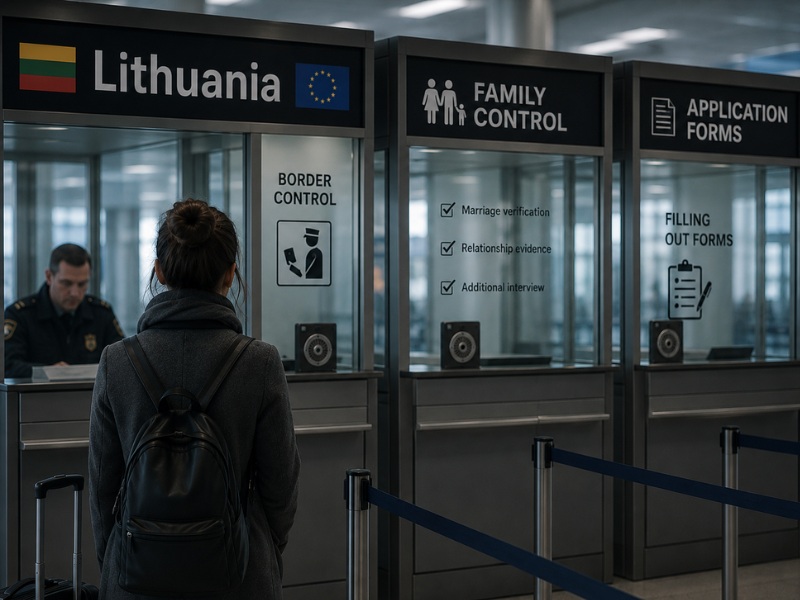
Comments on the Draft CEDAW General Recommendation No. 41 on Gender Stereotypes
Migrant women in Lithuania face layered controls, stereotypes and security checks that shape their rights to family life, residence and legal protection. Country: Lithuania Introduction This submission provides comments on selected provisions of the draft CEDAW General Recommendation No. 41 on gender stereotypes, based on an analysis of the situation in Lithuania. The submission focuses…
-
Belarus: Astravets Nuclear Power Plant as a Source of Long-Term Water Risk in the Vilija Basin
Upstream nuclear plant raises transparency concerns and long-term water risks for Lithuania’s river basin How Belarus and its political context influence policy and the environment in downstream Lithuania Problem formulation The Astravets Nuclear Power Plant (BelNPP), located in Belarus near the Lithuanian border (some call it Ostrovets, as they translate the name from Russian, since…
-

Comments on the Draft CEDAW General Recommendation No. 41 on Gender Stereotypes
Belarus uses law, policy and media to construct, legitimize and enforce gender stereotypes as systemic governance mechanisms shaping identity and roles Country: Belarus Introduction This submission provides targeted legal comments on selected provisions of the draft General Recommendation No. 41 (hereinafter – “the draft GR”), in light of the situation in the Republic of Belarus.…
-
“Right to Language”: Our House launches campaign to defend Belarusian linguistic rights
Our House launches campaign defending Belarusians’ right to use their language On May 6, the human rights organization Our House Centre for Human Rights and Relief officially launched the campaign “Right to Language” (“Права на мову”). The word mova in Belarusian means “language” – not only as a tool of communication, but as a core…
-
Transboundary Pollution Without an Operational Early Warning and Response Mechanism
Lack of coordinated early warning systems exposes Lithuania to unmonitored upstream pollution risks. Country: Belarus and its political context → implications for Lithuania Problem formulation The Vilija River, which becomes the Neris on the territory of Lithuania, constitutes a single transboundary watercourse in which any pollution originating upstream on the Belarusian side may have downstream…